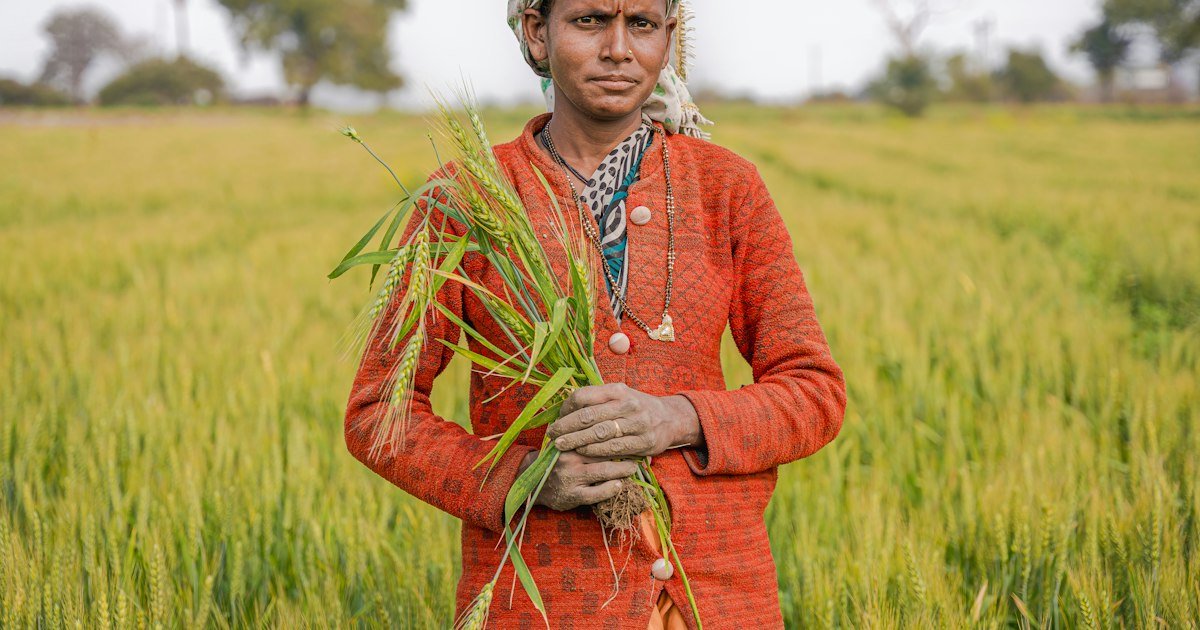
Khasra Girdawari is a field-level revenue record used to document the condition and cultivation of agricultural land during a particular inspection period. It connects the land parcel identified by a Khasra number with information about cultivation, crop status, and other field details. The exact format, terminology, inspection schedule, and online availability can differ by state.
For anyone researching an old land record, buying agricultural property, tracing family cultivation history, or trying to understand a revenue entry, Girdawari can provide information that is different from an ownership-focused record such as Jamabandi. This guide explains what Khasra Girdawari means, what it can contain, how it differs from related records, and where to look for official online services.
What Is Khasra Girdawari?
Khasra Girdawari is commonly understood as a crop or harvest inspection record maintained within the revenue administration. During a Girdawari process, field information is recorded against individual land parcels or Khasra numbers. The record may show what is being cultivated, whether the land is fallow, and other details prescribed by the relevant state revenue system.
Haryana’s official e-Girdawari information describes Khasra Girdawari as an important Revenue Department activity carried out at least twice a year, with special Girdawari possible when an exigency arises. It also explains that the Patwari maintains the register and that the information is checked by senior revenue officials.
This is important because Girdawari is not simply another name for every land record. It is primarily associated with field inspection and cultivation information. The exact evidentiary effect of an entry depends on the applicable state law, rules, record system, and the facts of a particular case.
What Information Is Recorded in Girdawari?
The fields vary across states and forms, but a Khasra Girdawari record can include information such as:
- Khasra number: the parcel or survey identifier used to locate the land in the revenue record.
- Cultivator or possession information: details relevant to the person cultivating or using the parcel during the inspection period, where the applicable form records them.
- Crop details: the crop observed or reported for the relevant agricultural season.
- Land condition: information such as cultivated, fallow, uncultivated, or another classification used by the state system.
- Irrigation information: where the local form captures the source or status of irrigation.
- Inspection or verification details: entries connected with the field inspection and subsequent checking process.
Do not assume that every state records every field listed above. For example, Haryana’s official description specifically refers to the Khasra-Girdawari register, Patwari maintenance, inspections, and senior-level checking.
Khasra Girdawari vs Khasra vs Jamabandi
These terms are often mixed together because they can appear in the same land-record ecosystem. Their practical purpose, however, is different.
| Record | What it generally helps identify | Why it matters |
|---|---|---|
| Khasra | Parcel or survey-level land information | Helps identify a specific plot or field in the revenue system |
| Khasra Girdawari | Field inspection, cultivation, crop, and related seasonal information | Helps understand the recorded agricultural use or field condition for an inspection period |
| Jamabandi | Record-of-rights and related landholding information, depending on the state | Helps research recorded ownership, rights, shares, and related revenue entries |
| Khatoni / Khewat | Holding or account-related information in systems where these terms are used | Helps connect persons, holdings, and land parcels within the local record structure |
For a deeper explanation of the parcel identifier, see our guide to Khasra Number. You can also compare it with our guides to Khatoni Number and Khewat Number.
How Often Is Girdawari Conducted?
Girdawari is linked to agricultural seasons, but the exact schedule is state-specific. In Haryana, the official e-Girdawari page says the activity is carried out at least twice a year and refers to Kharif and Rabi Girdawari. It also notes that special Girdawari may be conducted when an exigency arises.
Therefore, it is better to think of Girdawari as periodic field inspection rather than a single permanent entry. A crop or cultivation entry for one season should not automatically be treated as a statement about every season or every historical period.
Why Khasra Girdawari Matters for Land Research
1. Understanding Cultivation History
For historical land research, Girdawari can help establish what was recorded as being cultivated or used during a particular period. This can be especially useful when comparing older revenue documents with later records.
2. Comparing Revenue Records
When researching a property, it can be useful to compare Girdawari information with the relevant Jamabandi, Khasra, mutation, map, and other available records. A difference between records does not automatically prove an error or a legal right. It is a reason to investigate the underlying record, date, and applicable state procedure.
3. Agricultural Claims and Administrative Records
Because Girdawari concerns field inspection and crop information, it may be relevant to agricultural administration and claims where the applicable government scheme or state process requires cultivation or crop information. The precise requirements should always be checked with the relevant department.
4. Historical Property Research
Old Girdawari records can be useful when reconstructing the history of a family property or agricultural holding. Researchers should record the village, Khasra number, season, year, names, and document source so that entries from different periods can be compared accurately.
Khasra Girdawari in Punjab and Haryana
Punjab: The Government of Punjab explains that land records can include Records of Rights, tenancy records, crop inspection registers, mutation records, disputed-case records, and information relating to soil, irrigation, and crops. Its official land-record system provides online access to several land-record services, while certified copies are handled through designated channels.
Haryana: Haryana’s official e-Girdawari system was introduced to capture Khasra-Girdawari information digitally. The department states that the Patwari prepares and maintains the register, the activity is conducted at least twice a year, and the collected information is checked by senior revenue officials.
For state-specific background, you can also read our Punjab Jamabandi guide and Haryana Jamabandi guide.
How to Check Khasra Girdawari Online
Online access is not uniform across India. Some states provide a dedicated Girdawari service, while others expose crop or revenue information through a broader land-record portal. Start with the official state revenue or land-record website rather than an unofficial copy.
- Select the state: Use the official revenue or land-record portal for the state where the property is located.
- Choose the location: Depending on the portal, you may need the district, tehsil, village, or revenue circle.
- Identify the parcel: Keep the Khasra, survey, or Gata number available.
- Select the relevant period: If the portal provides season, year, or Jamabandi-period options, choose the period that matches your research.
- Review the record: Check the name, parcel number, crop or cultivation entry, and other available fields.
- Verify important records: If the document will be used for a transaction, dispute, loan, compensation claim, or legal proceeding, obtain the appropriate certified or official copy and confirm the current procedure with the relevant authority.
Official Examples
Rajasthan: Rajasthan’s official Apna Khata portal provides access to Jamabandi copies and includes a dedicated Girdawari Details service. The portal also cautions that online information may not always reflect immediate updates and that the online copy should not automatically be treated as a certified or authorized copy for court or office use.
Uttar Pradesh: The official UP Bhulekh portal provides online access to land-related information, including Khatauni and parcel-related services. The portal identifies itself as a service of the Board of Revenue, Government of Uttar Pradesh.
Haryana: The Government of Haryana provides information about e-Girdawari, and the National Government Services Portal lists an online service for applying for Girdawari in Haryana.
Punjab: The official Punjab Land Records portal provides services for viewing Jamabandi and searching by identifiers such as owner name, Khewat number, and Khasra number.
How to Read an Old Girdawari Record
Old records may use regional revenue terminology, abbreviations, handwritten entries, or scripts that are difficult for modern readers. If your document is from Bihar, Uttar Pradesh, or another region where older revenue papers may use Kaithi or other historical scripts, first identify the village, Khasra number, year, season, names, and crop entries. Then compare the same parcel across related records.
Our Kaithi Script Guide explains the broader process of reading historical revenue records. For handwritten documents, see Kaithi Handwriting, and for digital character information, see our Kaithi Unicode guide.
Important Limitations of Khasra Girdawari
A Girdawari entry should be read in context. It is not automatically a complete ownership record, and the presence of a person’s name as a cultivator should not by itself be treated as conclusive proof of ownership. Likewise, an absence of an online entry does not necessarily mean that no historical record exists.
State terminology and procedures also differ. Online portals may contain digitized records while older registers remain available through local revenue offices. If you find a conflict between Girdawari, Jamabandi, mutation, registry, or other documents, the correct way to resolve it depends on the applicable state procedure and the nature of the dispute.
Frequently Asked Questions About Khasra Girdawari
What does Khasra Girdawari mean?
Khasra Girdawari generally refers to a revenue field-inspection or crop-inspection record associated with a particular land parcel. It can record cultivation, crop, and related field information for a specific period.
Is Girdawari the same as Jamabandi?
No. They serve different purposes. Girdawari is primarily associated with field inspection and cultivation information, while Jamabandi generally relates to the record-of-rights and landholding information used by the relevant state revenue system.
Is Khasra Girdawari updated every year?
Its inspection schedule is state-specific. Haryana’s official information describes at least two inspections a year and identifies Kharif and Rabi Girdawari. Other states can use different procedures or terminology.
Can I check Girdawari online?
In some states, yes. Rajasthan provides a Girdawari Details service through Apna Khata, while Haryana provides e-Girdawari services. Other states may expose related information through their land-record portals.
Does a Girdawari entry prove ownership?
Not by itself. A Girdawari entry is generally related to field inspection and cultivation information. Ownership and other rights should be researched through the complete set of applicable revenue and property records.
Final Takeaway
Khasra Girdawari is an important part of India’s revenue-record ecosystem because it links a land parcel with field-level cultivation and inspection information. For accurate land research, do not read it in isolation. Compare the Khasra number, season, year, names, crop details, Jamabandi, mutation history, maps, and other relevant records.
Most importantly, use official state portals for current online information and follow the relevant department’s procedure when you need a certified copy. Because land-record terminology and legal procedures vary by state, treat this article as an educational guide rather than a substitute for an official record or professional legal advice.
Official Sources
- Haryana e-Girdawari — Department of Information Technology, Electronics & Communication
- Punjab Land Records — Government of Punjab
- Punjab Land Records / Easy Jamabandi — Government of Punjab
- Apna Khata — Government of Rajasthan
- UP Bhulekh — Board of Revenue, Government of Uttar Pradesh
- Apply for Girdawari, Haryana — National Government Services Portal
2 thoughts on “Khasra Girdawari: Meaning, Records, Crop Inspection & Online Guide”