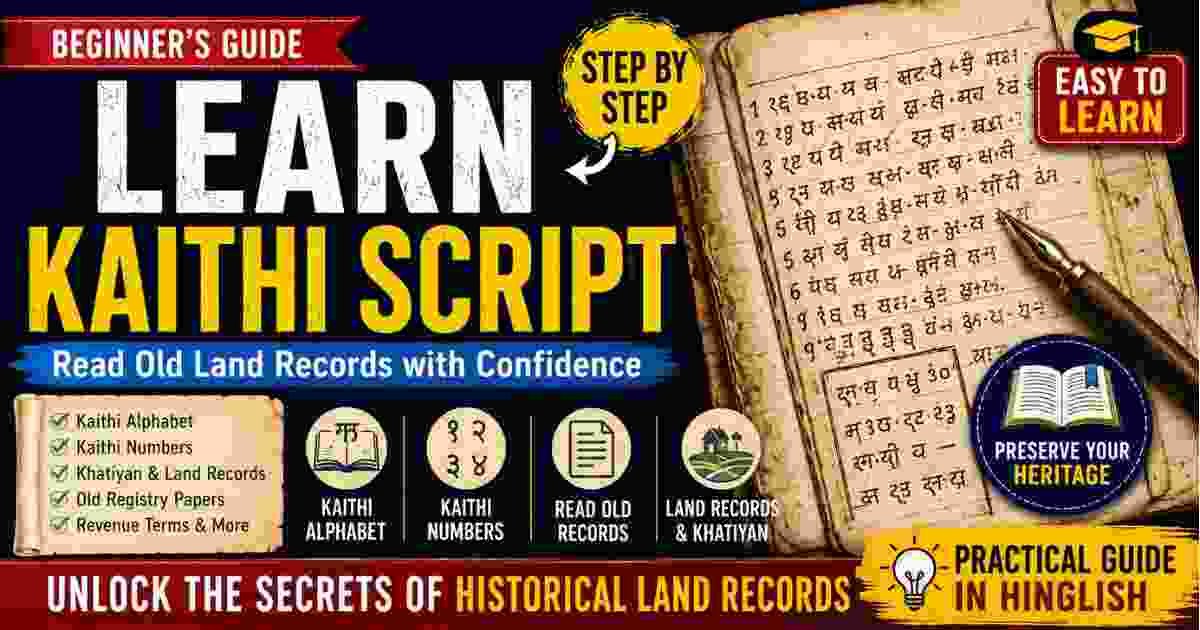
Learn Kaithi Script: Complete Beginner’s Guide to Reading Old Land Records
Agar aapke family ke paas purane Khatiyan, land records, registry papers, revenue documents ya ancestral property papers hain, toh unmein likhi Kaithi script dekhkar confusion hona bilkul normal hai. Aaj ke time me Hindi aur English widely used hain, lekin Bihar, Jharkhand and Uttar Pradesh aur North India ke historical documents me Kaithi script ka important role raha hai. Isi wajah se Learn Kaithi Script karna sirf ek language-learning activity nahi hai; ye old documents aur family history ko understand karne ka practical skill bhi ban sakta hai.
Kaithi ek historical North Indian script hai jo Bihar, Jharkhand aur Uttar Pradesh ke areas me use hoti thi. Unicode Standard ke according, Kaithi ka use administrative purposes, commercial transactions, correspondence, personal records ke saath religious aur literary materials ke liye bhi hua. Historical usage ko samajhne ke liye Unicode ka official Kaithi section ek useful technical reference hai.
Is guide ka purpose beginners ko step-by-step Learn Kaithi Script karne ka practical roadmap dena hai. Aap alphabet se start karenge, phir numbers, handwriting patterns, common revenue terms aur finally old Khatiyan aur registry documents ko context ke saath read karne ki approach samjhenge.
What Is Kaithi Script?
Kaithi ek historical Indic script hai jiska connection North India ke writing traditions se raha hai. Unicode Standard ise Devanagari aur Gujarati se related North Indian script ke roop me describe karta hai. Historical records me iska use different languages ko write karne ke liye bhi hua, including Bhojpuri, Magahi, Awadhi aur other related languages.
Simple words me samjhein toh Kaithi ko ek writing system samajhna better hai, na ki ek single modern spoken language. Isi reason se kisi old document ko read karte waqt script aur language dono identify karna important hota hai.
Agar aap Learn Kaithi Script karna chahte hain, toh pehle ye difference clear rakhein: Kaithi characters ko recognize karna ek skill hai, jabki historical document ka complete meaning samajhna ek separate process hai. Document me local language, Persian-origin administrative words, revenue terminology aur handwritten abbreviations bhi mil sakte hain.
Why Should You Learn Kaithi Script?
Learn Kaithi Script karne ka sabse practical benefit old documents ko better understand karna hai. Bahut se families ke paas generations-old property papers, Khatiyan, land registers ya handwritten records ho sakte hain jinke characters modern readers ke liye unfamiliar hain.
Aap jab Kaithi padhna start karte hain, toh old document ek random collection of symbols nahi lagta. Dheere-dheere aap letters, numbers, names aur recurring terms ko identify karna begin karte hain.
Ye skill researchers, family-history enthusiasts, students aur historical-document readers ke liye particularly useful ho sakti hai. Recent Bihar reporting has also highlighted renewed interest in Kaithi training because historical land-related documents can still require script knowledge during land documentation and survey work.
Where Was Kaithi Script Used?
Kaithi ka historical use North India ke different areas me raha hai. Unicode specifically present-day Bihar, Jharkhand aur Uttar Pradesh ke region ka mention karta hai.
Bihar
Bihar Kaithi ke historical use ka important region raha hai. Old revenue records, personal papers, correspondence aur other historical documents me Kaithi writing mil sakti hai.
Agar aap Bihar ke Historical Land Records research kar rahe hain, toh local terminology aur document format ko script ke saath samajhna useful hoga.
Uttar Pradesh
Uttar Pradesh ke kuch historical records aur documents me bhi Kaithi ka use milta hai. Region ke according handwriting aur terminology vary kar sakti hai.
Isliye ek Bihar document ko dekhkar har UP document ka exact reading pattern assume karna safe nahi hai.
Jharkhand
Jharkhand ke kuch historical areas me bhi Kaithi Script ka use administrative aur local record-keeping contexts me mil sakta hai. Purane land records, revenue documents, Khatiyan aur family property papers me regional writing practices aur historical terminology dekhne ko mil sakti hai. Agar aap Jharkhand ke old Historical Land Records ko research kar rahe hain, toh Kaithi ke saath local place names, revenue terms aur numerical entries ko bhi carefully identify karna useful hai. Current land ownership ya property status verify karne ke liye historical documents ke saath official Government Land Records ko bhi compare karein.
Other Historical Contexts
Kaithi ka use administrative aur commercial contexts ke beyond personal, religious aur literary materials me bhi documented hai. Unicode ke historical description ke according iska use at least 16th century se early 20th century tak administrative communication me raha.
How to Learn Kaithi Script Step by Step
Agar aap genuinely Learn Kaithi Script karna chahte hain, toh random old documents se start karne ke bajay structured approach follow karein.
Step 1: Kaithi Alphabet Se Start Karein
Sabse pehle vowels aur consonants ke basic forms identify karein. Har character ka shape samajhne ki practice karein.
Aap hamari dedicated Kaithi Alphabet Guide se alphabet learning ko systematically start kar sakte hain.
Step 2: Kaithi Numbers Seekhein
Alphabet ke baad numbers ko identify karna important hai. Historical land records me Khata Number, Plot Number, Survey Number, dates aur land measurements jaise numerical details important ho sakte hain.
Iske liye Kaithi Numbers Complete Guide ko supporting resource ke roop me use karein.
Step 3: Handwriting Variations Practice Karein
Printed character aur handwritten character same appearance nahi rakh sakte. Historical documents different writers aur time periods se belong kar sakte hain.
Isliye Learn Kaithi Script karte waqt ek hi character ke multiple examples compare karna useful hai.
Step 4: Common Words Identify Karein
Owner names, village names, land terms aur recurring administrative words ko identify karna start karein.
Jab aap frequently appearing words ko recognize karne lagte hain, reading speed naturally improve hoti hai.
Step 5: Simple Documents Read Karein
Pehle short entries aur relatively clear handwriting wale documents choose karein. Long paragraphs ya heavily damaged papers se beginner stage par start karna unnecessary difficulty create karega.
Step 6: Khatiyan Par Practice Karein
Ab Khatiyan, revenue records aur old registry papers me learned characters ko apply karein.
Step 7: Modern Records Se Compare Karein
Historical document se milne wale names, numbers aur village details ko current official records ke saath compare karein. Is process ko final legal conclusion ke roop me nahi, balki document research aur verification ke ek step ke roop me dekhein.
Learn Kaithi Alphabet Before Reading Documents
Learn Kaithi Script ka foundation Kaithi Alphabet hai. Agar aap letters identify nahi kar sakte, toh complete document reading difficult rahegi.
Kaithi Alphabet learning ke time vowels, consonants aur their combinations ko separately practice karein. Sirf alphabet chart memorize karna enough nahi hai; actual handwritten examples ke saath comparison zaroor karein.
Unicode ke official character chart me Kaithi ke independent vowels aur consonants separately encoded hain, making it a useful technical reference for researchers and digital-text work.
Aap is page ke saath Learn the Kaithi Alphabet ko internally connect kar sakte hain.
Learn Kaithi Numbers for Land Records
Alphabet ke baad Kaithi Numbers seekhna next logical step hai. Old land documents me numbers names jitne hi important ho sakte hain.
Aapko document me Khata Number, Plot Number, Survey Number, dates, area measurements ya document references mil sakte hain.
Agar ek digit incorrectly read ho jaye, toh modern Land Record Search me completely different result aa sakta hai. Isliye number identification ko carefully practice karna chahiye.
Detailed practice ke liye Learn Kaithi Numbers page ko use karein.
Learn Kaithi Script for Reading Khatiyan
Khatiyan historical land documentation ke context me ek important document type hai. Lekin har Khatiyan ka exact format same nahi hoga. Region, period, administrative system aur document creator ke according entries differ kar sakti hain.
Khatiyan read karte waqt pehle headings aur columns identify karein. Uske baad owner names, land references, numerical information aur other recurring terms ko separate notes me record karein.
Ek beginner ke liye best method ye hai ki complete paragraph ko immediately translate karne ki koshish na kare. Pehle individual characters aur words identify karein, phir sentence-level meaning establish karein.
Learn Kaithi Script for Old Registry Papers
Old Registry Papers ko read karna thoda more challenging ho sakta hai because registration documents me formal terminology, dates, names, property descriptions aur numerical references ek saath aa sakte hain.
Aise document ko read karte waqt:
- Document date identify karein.
- Names aur place names mark karein.
- Numerical references separately note karein.
- Property description ko carefully read karein.
- Repeated terms ko compare karein.
- Unclear characters ke multiple interpretations note karein.
Agar document legal ownership se related hai, toh personal reading ko final legal interpretation na samjhein.
Learn Kaithi Revenue Terms
Sirf letters aur numbers learn karna enough nahi hai. Revenue terminology bhi samajhna zaroori hai.
Historical land documents me terms modern Online Bhulekh terminology se different ho sakte hain. Aapko Khata, Plot, land measurement, mutation aur other revenue-related words ka context samajhna chahiye.
Ye approach aapko old Revenue Records ko modern Digital Land Records se compare karne me help karegi.
Kaithi Handwriting Ko Kaise Practice Karein?
Printed examples relatively easy lag sakte hain, lekin handwritten Kaithi me real challenge start hota hai.
Writer ki speed, pen movement, abbreviations aur individual handwriting style ki wajah se same character different appearance de sakta hai.
Isliye Learn Kaithi Script karte waqt ek practical notebook maintain karein. Difficult characters ko copy karein, possible readings likhein aur phir same character ko document ke doosre sections me search karein.
Repeated exposure se pattern recognition improve hoti hai.
Common Mistakes Beginners Make
Modern Hindi Se Directly Compare Karna
Kaithi ko simply old Hindi handwriting samajhna mistake ho sakti hai. Script, language aur historical terminology ko separately analyse karein.
Ek Character Ka Single Meaning Assume Karna
Unclear handwriting me context important hota hai. Ek character ko isolated form me dekhkar immediate conclusion avoid karein.
Numbers Ignore Karna
Land records me numbers highly significant ho sakte hain. Khata, Plot, Survey Number aur dates ko carefully record karein.
Old and Current Records Ko Automatically Same Samajhna
Historical record aur current government entry me changes ho sakte hain. Isliye comparison multiple identifiers ke basis par karein.
Legal Conclusion Khud Se Banana
Historical document reading educational research me useful hai, lekin ownership dispute ya legal matter me qualified professional aur official records ki verification important hai.
Learn Kaithi Script and Modern Bhulekh Records
Aaj users Online Bhulekh aur state-level digital land-record systems ke through current information access kar sakte hain. Lekin historical documents ka format modern digital portal se completely different ho sakta hai.
Isliye old record ko current database se compare karte waqt owner name ke saath village, Khata Number, Plot Number, Survey Number aur land area jaise details ko consider karein.
Agar historical aur modern records me difference milta hai, toh us difference ko immediately error na samjhein. Land survey, mutation, partition, consolidation ya administrative changes ki wajah se records evolve ho sakte hain.
Learn Kaithi Script for Ancestral Property Research
Agar aap family ki Ancestral Property history research kar rahe hain, toh Kaithi reading skill valuable ho sakti hai.
Old papers aapko family names, villages, land references aur historical transactions ke clues de sakte hain. Lekin ek old paper ko automatically current Property Ownership Proof nahi maana jaana chahiye.
Property history research ko multiple documents aur current official records ke saath cross-check karna better approach hai.
Useful Resources to Learn Kaithi Script
Aapki learning journey ko structured banane ke liye internal aur external resources dono use karein.
Internal Resources
- Complete Kaithi Script Guide — overall Kaithi learning roadmap
- Kaithi Alphabet Guide — letters, vowels and consonants
- Kaithi Numbers Guide — historical numerals and numerical entries
Authoritative External Resources
Unicode Standard Kaithi script ke historical background aur encoded characters ko understand karne ke liye strong technical reference hai. Aap Unicode Standard – Kaithi Script ko reference ke roop me use kar sakte hain.
Specific Kaithi characters dekhne ke liye Unicode Kaithi Character Chart bhi useful hai.
Historical records aur archival research ke liye National Archives of India bhi relevant resource hai.
How Long Does It Take to Learn Kaithi Script?
Learn Kaithi Script karne me exact time har person ke liye different hoga. Agar aapko already Devanagari ya kisi related Indic script ka experience hai, toh character recognition comparatively easier feel ho sakta hai.
Beginner ke liye consistency speed se zyada important hai. Roz thoda time alphabet, numbers aur handwritten samples par spend karna better hai than ek din me bahut saara material memorize karna.
Aapka goal initially fluent reading nahi hona chahiye. Pehla goal character recognition, second goal word recognition, aur third goal document-level reading hona chahiye.
Conclusion
Learn Kaithi Script karna ek useful journey hai, especially agar aap old Historical Land Records, Khatiyan, registry papers, revenue documents ya ancestral property records ko understand karna chahte hain. Start karne ka best method alphabet se hai, uske baad numbers, common words, handwriting patterns aur finally complete documents par practice karein.
Kaithi ko sirf old handwriting samajhne ke bajay ek historical writing system ke roop me study karein. Is approach se aapko letters ke saath document structure, revenue terminology aur numerical information ko bhi understand karne ka framework milega.
Aapki learning sequence simple rakhein: Kaithi Alphabet → Kaithi Numbers → Common Revenue Terms → Khatiyan Reading → Old Registry Papers → Historical Land Record Verification.
Aur sabse important baat, historical document ko carefully read karein, assumptions avoid karein aur important property information ko current official records se verify karein.
Agar aap complete Kaithi learning journey follow karna chahte hain, toh pehle Complete Kaithi Script Guide se start karein, phir Kaithi Alphabet aur Kaithi Numbers supporting guides ko follow karein.
Is Kaithi difficult to learn?
Beginning me Kaithi unfamiliar lag sakti hai, especially jab handwritten documents read karne ho. Lekin alphabet, numbers aur common words ko systematically practice karne se learning easier ho sakti hai.
Can I learn Kaithi online?
Haan. Online resources ke through alphabet, numbers, Unicode characters aur historical document-reading concepts learn kiye ja sakte hain. Practical handwritten documents ke saath regular practice bhi important hai.
Do I need to know Hindi before learning Kaithi?
Hindi knowledge helpful ho sakti hai, especially agar document ki language Hindi-related ho. Lekin Kaithi ek script hai, isliye script learning aur language understanding ko separate skills ke roop me samajhna better hai.
Can Kaithi help me read old land records?
Haan, Kaithi knowledge old land records ko decode karne me helpful ho sakti hai. Lekin complete interpretation ke liye historical revenue terminology aur document context bhi samajhna zaroori hai.
Is Kaithi still used today?
Kaithi ka historical use modern period me significantly decline hua, with Devanagari becoming dominant in many contexts. Unicode documents its historical administrative use through the early 20th century.
Can I translate a Kaithi document myself?
Basic reading aur transcription practice aap khud kar sakte hain. Lekin unclear, damaged ya legally important documents ke case me qualified expert se verification karna safer hai.
4 thoughts on “Learn Kaithi Script: Complete Beginner’s Guide to Reading Old Land Records”