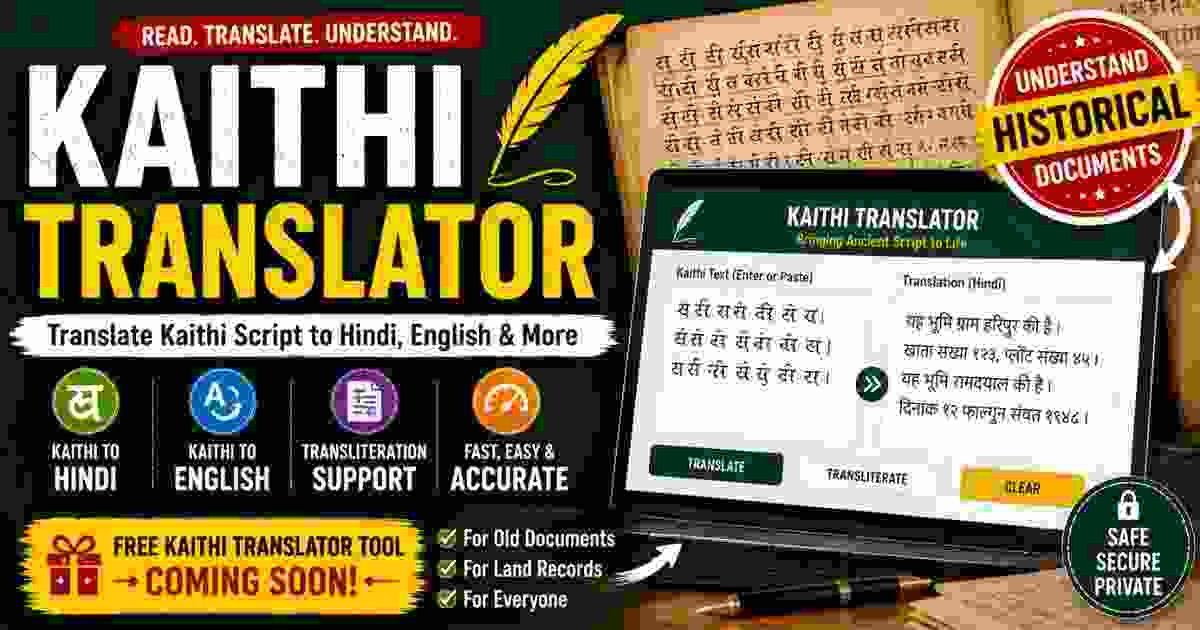
Kaithi Translator: Read and Understand Kaithi Script Online
Agar aap purane Kaithi documents, Khatiyan, revenue records, registry papers ya ancestral property documents ko samajhna chahte hain, toh Kaithi Translator ek useful starting point ho sakta hai. Kaithi ek historical script hai jo North India ke different regions me administrative, commercial aur personal writing ke liye use hoti thi.
Lekin historical documents ko translate karna modern text translate karne se different hai. Old handwriting, faded ink, abbreviations, regional vocabulary aur damaged documents translation ko challenging bana sakte hain. Isliye Kaithi text ko samajhne ke liye script recognition ke saath historical context bhi important hai.
Is guide me hum dekhenge ki Kaithi Translator ka concept kya hai, Kaithi script ko kaise read aur translate kiya ja sakta hai, aur future me ek free online translation tool kis tarah kaam kar sakta hai.
Agar aap bilkul beginner hain, toh pehle hamara Kaithi Script Guide dekhein. Ye aapko Kaithi script ke history, alphabet aur historical land records ke basic concepts samajhne me help karega.
What Is a Kaithi Translator?
Kaithi Translator ek aisa translation system ya tool ho sakta hai jo Kaithi script me likhe text ko identify karke kisi modern language, jaise Hindi ya English, me samajhne me help kare.
Yahan ek important difference samajhna zaroori hai:
Transliteration ka matlab script ko doosri writing system me represent karna hai, jabki translation ka matlab original text ka meaning doosri language me explain karna hai.
For example, Kaithi text ko Roman letters me convert karna transliteration ho sakta hai. Lekin uska Hindi ya English meaning provide karna translation hoga.
Historical documents me dono processes useful ho sakte hain.
How Does a Kaithi Translator Work?
Ek digital translation system ko several stages me kaam karna pad sakta hai. Sabse pehle input text ko identify kiya jaata hai. Uske baad characters, words aur sentence structure analyze kiye jaate hain.
Use: Unicode Kaithi Character Chart → official character reference.
Kaithi Character Recognition
First step character recognition hai. System ko Kaithi characters ko identify karna hoga.
Iske liye Kaithi Alphabet ka knowledge important hai. Different handwriting styles ke wajah se same character slightly different appear kar sakta hai.
Agar aap alphabet ko systematically learn karna chahte hain, toh hamara Kaithi Alphabet Guide useful starting point hai.
Use: Unicode Kaithi Names List → individual Kaithi character names and code points.
Kaithi Words and Sentences
Individual character identify karna sirf first step hai. Uske baad characters ko words aur sentences ke context me samajhna hota hai.
Historical documents me abbreviated forms aur regional terminology mil sakti hai. Therefore, direct word-by-word conversion hamesha accurate meaning nahi de sakta.
Transliteration vs Translation
Transliteration original pronunciation ya character sequence ko another script me represent karta hai.
Translation original language ka meaning another language me communicate karta hai.
Kaithi documents ke case me pehle transliteration aur phir translation karna kabhi-kabhi more reliable workflow ho sakta hai.
Understanding Historical Context
Historical context bahut important hai.
Ek word ka meaning document ke period, region, language aur purpose ke according change ho sakta hai. Revenue document ki terminology personal letter se different ho sakti hai.
Kaithi Translator for Beginners
Beginners ke liye directly complex old documents translate karna difficult ho sakta hai. Therefore, basic Kaithi characters se start karna better approach hai.
Pehle alphabet learn karein. Then numbers practice karein. Uske baad simple handwritten words aur short phrases read karein.
Aapka learning sequence is tarah ho sakta hai:
Kaithi Alphabet → Kaithi Numbers → Learn Kaithi Script → Kaithi Handwriting → Translation
Hamari Learn Kaithi Script Guide aapko step-by-step practice ke liye useful supporting resource provide karti hai.
How to Translate Kaithi Script Step by Step
Identify the Kaithi Characters
Sabse pehle document me visible characters identify karein. Agar handwriting clear nahi hai, toh multiple occurrences compare karein.
Ek unclear character ko immediately guess karna avoid karein.
Recognize Kaithi Numbers
Historical land records me numbers extremely important hote hain.
Khata Number, Plot Number, Survey Number, dates aur measurements ko carefully identify karna zaroori hai.
Kaithi numbers practice karne ke liye Kaithi Numbers Guide ko internally link karein.
Read Individual Words
Characters ko identify karne ke baad words read karein.
Agar koi word unclear hai, toh document me usi word ki another occurrence search karein. Repeated handwriting comparison useful ho sakta hai.
Understand the Complete Sentence
Word-by-word translation ke bajay complete sentence ka context dekhein.
Historical records me administrative terminology frequently repeat ho sakti hai. Therefore, surrounding words meaning understand karne me help karte hain.
Check the Historical Context
Document ka approximate period, location aur purpose identify karein.
Bihar, Uttar Pradesh, Jharkhand aur other regions ke historical records me vocabulary aur writing practices vary kar sakti hain.
Kaithi Translator for Historical Land Records
Historical Land Records ke liye translation particularly sensitive ho sakti hai.
Old records me landholder names, village names, plot references, revenue information aur property descriptions mil sakte hain.
Translation karte waqt original text ko preserve karna important hai. Pehle original entry ka transcription banayein. Then translated meaning separately record karein.
Is approach se original document aur interpretation ke beech difference clear rehta hai.
Historical translation ko current ownership ka automatic proof nahi maana jaana chahiye.
Kaithi Translator for Khatiyan Records
Khatiyan historical land-record research ka important source ho sakta hai.
Kaithi me written old Khatiyan ko understand karte waqt names, land details, numerical entries aur revenue terminology ko separately identify karein.
Agar handwriting difficult hai, toh Kaithi Handwriting Guide se character comparison aur handwriting recognition techniques learn karein.
Modern digital records ke saath old Khatiyan compare karte waqt dates aur record periods ko carefully check karein.
Kaithi Translator for Old Registry Papers
Old registry papers me personal names, property descriptions, village names, dates aur transaction-related terminology ho sakti hai.
Aise documents ko translate karte waqt every word ko independently interpret karne ke bajay complete paragraph aur document structure dekhein.
Faded sections me guessing avoid karein. Agar possible ho, high-resolution scan ya photograph use karein.
Property-related document ka translation aur uska legal interpretation two different things hain.
Kaithi Translator for Revenue Records
Historical Revenue Records me administrative terminology frequently appear kar sakti hai.
Land-related terms ko translate karte waqt region aur historical period ko consider karna important hai.
Ek old revenue term ka modern equivalent exact one-to-one match nahi bhi ho sakta. Therefore, translated term ke saath original term preserve karna useful practice ho sakta hai.
Can Kaithi Handwriting Be Translated?
Yes, handwritten Kaithi text ko translate karna theoretically possible hai, but accuracy document quality par depend karegi.
Clear Handwriting
Clear, high-resolution handwriting relatively easier to identify ho sakti hai.
Repeated characters aur complete words ko compare karna useful hota hai.
Faded or Damaged Documents
Faded ink, torn paper, stains aur missing portions translation ko difficult bana sakte hain.
Aise cases me automated output ko final reading nahi maana jaana chahiye.
Different Handwriting Styles
Different writers ka character formation different ho sakta hai.
Isi reason se Kaithi Handwriting ko separately learn karna valuable hai.
Aapke Kaithi Handwriting Guide me old handwritten documents ko understand karne ke practical methods explain kiye gaye hain.
Kaithi Translator vs Kaithi Transliteration
Ye dono terms similar lagte hain, lekin meaning different hai.
Kaithi Transliteration: Kaithi script ke text ko another script, such as Roman or Devanagari, me represent karna.
Kaithi Translation: Kaithi me written content ka meaning Hindi, English ya another language me communicate karna.
Historical research me transliteration first step ho sakta hai, while translation second step.
Common Kaithi Words and Their Meanings
Kaithi historical documents me frequently used terminology document ke purpose ke according vary kar sakti hai.
Land records ke context me aapko ownership, land measurement, village, revenue aur administrative terms mil sakte hain.
However, kisi historical word ka exact meaning determine karte waqt sirf modern dictionary par depend nahi karna chahiye.
Document ka region, period aur surrounding text bhi consider karein.
Aap future me is topic ke liye ek dedicated Kaithi Revenue Terms Guide create kar sakte hain aur us page ko yahan internally link kar sakte hain.
Kaithi Numbers and Dates
Numbers historical records me especially important hote hain.
Aapko document me:
- Khata Number
- Plot Number
- Survey Number
- Dates
- Land measurements
- Revenue amounts
jaise numerical details mil sakti hain.
Isliye Kaithi translation se pehle Kaithi Numbers ko properly understand karna useful hai.
Detailed practice ke liye Kaithi Numbers Guide dekhein.
How Accurate Is a Kaithi Translator?
Translation accuracy input quality, character recognition, vocabulary, historical context aur handwriting clarity par depend karti hai.
Printed or clearly typed Kaithi text comparatively easier ho sakta hai. However, old handwritten documents more challenging ho sakte hain.
A future automated Kaithi Translator useful preliminary interpretation provide kar sakta hai, but legal, property or inheritance matters ke liye official records aur qualified professionals se verification important hai.
Limitations of Online Kaithi Translation
Online translation systems ki kuch important limitations ho sakti hain.
Poor-quality images, faded ink, unusual handwriting, abbreviations, missing characters aur regional terminology automated interpretation ko affect kar sakte hain.
Therefore, kisi translation ko blindly accept karne ke bajay original document ke saath compare karein.
Particularly Land Ownership Record, Ancestral Property ya legal documents ke case me additional verification zaroor karein.
Free Kaithi Translator Tool — Coming Soon
Useful Kaithi Resources
Kaithi translation seekhne ke liye multiple resources ko combine karna better approach hai.
Use: Unicode Standard – Kaithi Script → background, Unicode encoding, and historical information.
Explore More Land Record Guides
- Kaithi Script Guide
- Kaithi Alphabet Guide
- Kaithi Numbers Guide
- Learn Kaithi Script
- Kaithi Handwriting Guide
Trusted External Guides & Reference Sources
Unicode ka official documentation Kaithi script ke history, characters aur writing behavior ko understand karne ke liye useful reference hai.
Conclusion
Kaithi Translator ka concept beginners, researchers aur historical-document readers ke liye useful ho sakta hai. However, Kaithi translation sirf character conversion ka process nahi hai. Historical context, handwriting style, numbers, abbreviations aur document structure bhi important roles play karte hain.
Agar aap Kaithi seekhna start kar rahe hain, toh pehle Kaithi Alphabet, phir Kaithi Numbers, uske baad Learn Kaithi Script aur Kaithi Handwriting practice karein. Once these basics are clear, historical documents ko understand karna comparatively easier ho sakta hai.
Future me ek dedicated free Kaithi Translator Tool users ko Kaithi text ko Hindi, English ya Roman transliteration me understand karne me help kar sakta hai.
Lekin property, inheritance aur legal matters me automated translation ko final decision ka basis nahi banana chahiye. Original Historical Land Records, official records aur professional verification ko priority deni chahiye.
Frequently Asked Questions
-
What is a Kaithi Translator?
A Kaithi Translator ek tool ya translation method hai jo Kaithi script me written text ko modern language me understand ya translate karne me help karta hai.
-
Can Kaithi be translated into Hindi?
Yes, Kaithi text ko Hindi me translate kiya ja sakta hai, provided the characters and historical context can be accurately identified.
-
Can Kaithi be translated into English?
Yes. Kaithi text ka English translation possible hai, although historical vocabulary aur handwriting accuracy important factors hain.
-
Can a Kaithi Translator read handwriting?
A future automated system kuch handwritten Kaithi characters recognize kar sakta hai, but difficult, faded or unusual handwriting ke cases me accuracy limited ho sakti hai.
-
Can I translate old Kaithi land records?
Yes, you can study and translate old Kaithi land records, but historical property documents should be carefully verified against relevant official records.
-
Is an online Kaithi Translator accurate?
Accuracy text quality, handwriting, document condition and historical context par depend karegi. Automated translation ko important legal documents ke liye final authority nahi maana jaana chahiye.
-
Will the Kaithi Translator be free?
The planned tool can be offered as a free educational feature on kaithianuvadai.in. However, availability and features should be confirmed once the actual tool is launched.
11 thoughts on “Kaithi Translator: Read and Understand Kaithi Script Online”