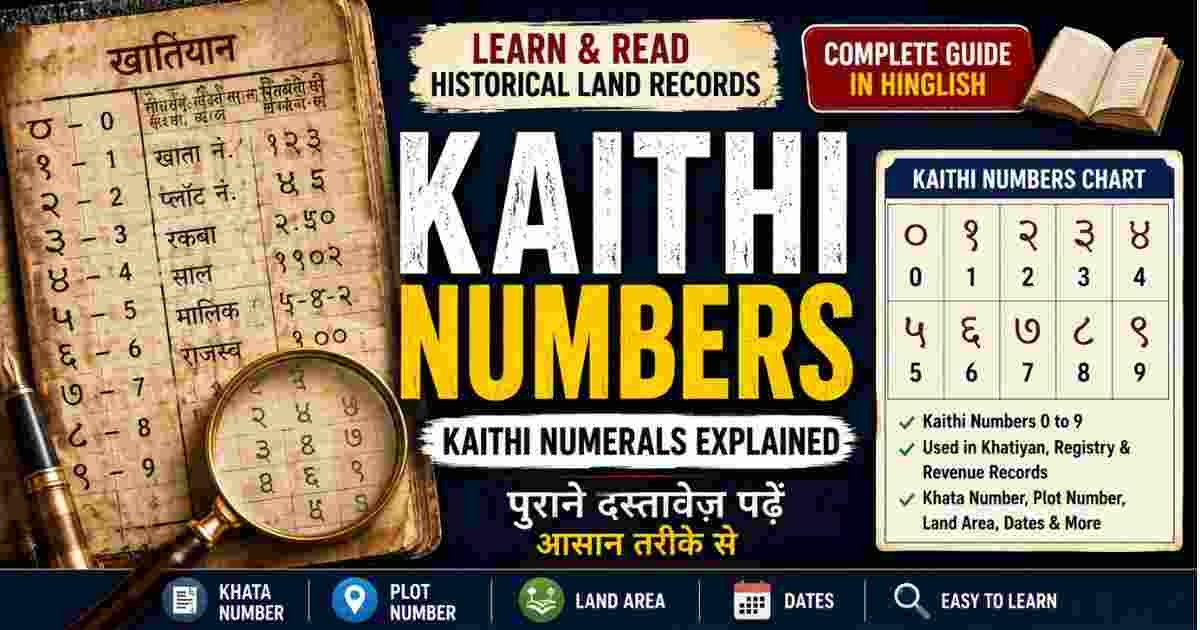
Kaithi Numbers samajhna un logon ke liye bahut important hai jo purane Historical Land Records, Khatiyan, revenue registers, registry papers aur ancestral property documents ko read karna chahte hain. Kaithi Script sirf letters tak limited nahi thi; historical documents me numbers ka bhi important role tha. Land area, Khata Number, Plot Number, revenue amount, dates aur doosri administrative details ko samajhne ke liye numerical entries ko correctly identify karna zaroori hai.
Agar aapne kabhi purana Kaithi document dekha hai, toh aapne notice kiya hoga ki usme likhe characters modern 0–9 numbers jaise immediately recognizable nahi hote. Handwriting, document age aur regional writing style ke according numerical forms change ya difficult-to-read ho sakte hain. Isi wajah se beginners ko Kaithi Numbers ko alag se practice karna helpful hota hai.
Is guide ka purpose aapko Kaithi numerals ko practical way me samajhne me help karna hai. Aap jaanenge ki historical documents me numbers kahan milte hain, unhe kaise identify karein, Kaithi Khatiyan me numerical information kaise locate karein, aur modern Digital Land Records ke saath historical entries ko compare karte waqt kin baaton ka dhyan rakhein.
Important: Historical document ki numerical reading educational purpose ke liye useful hai. Property ownership, land title, mutation ya legal rights confirm karne ke liye latest official government records ko verify karein.
What Are Kaithi Numbers?
Kaithi Numbers se generally Kaithi writing tradition me use kiye gaye numerical characters aur numerical writing forms ko refer kiya jata hai. Historical Kaithi documents me numbers ka use administrative, commercial aur revenue-related information record karne ke liye kiya ja sakta tha.
Purane land records me numbers particularly important hote the, kyunki ek document me multiple numerical references ho sakte hain. For example, ek record me Khata Number, Plot Number, land area, revenue assessment, date ya other reference numbers appear kar sakte hain.
Isliye Kaithi script padhte waqt sirf alphabet seekhna enough nahi hai. Agar letters accurately read ho rahe hain lekin numbers incorrectly identify ho rahe hain, toh document ka meaning completely change ho sakta hai.
Beginners ko pehle numerical characters ke common forms recognize karne chahiye. Uske baad unhe actual historical documents me identify karne ki practice karni chahiye.
Why Are Kaithi Numbers Important for Land Records?
Historical Revenue Records me numerical information ka role bahut important hota hai. Land administration me property ko identify karne ke liye different numbers aur measurements use kiye ja sakte hain.
For example, aapko kisi old record me ye information mil sakti hai:
- Khata Number
- Plot Number
- Survey Number
- Land area
- Revenue amount
- Assessment details
- Date
- Register or document reference
- Serial number
Agar aap Ancestral Property ke old documents research kar rahe hain, toh in numerical details ko carefully note karna chahiye.
Suppose kisi old Khatiyan me owner ka naam clearly readable hai, lekin Plot Number galat read ho gaya. Modern Online Bhulekh portal par search karte waqt aapko completely different parcel mil sakta hai. Isi liye numerical accuracy land-record research ka important part hai.
Kaithi Numerals vs Modern Numbers
Modern India me hum generally Arabic numerals, yani 0 se 9 tak ke commonly used digits, use karte hain. Historical documents me numerical writing ka appearance different ho sakta hai.
Is difference ki wajah se beginner ko old document aur modern document ke numbers compare karte waqt caution rakhna chahiye.
| Feature | Historical Kaithi Document | Modern Land Record |
| Writing | Handwritten | Mostly digital or standardized |
| Numerals | Historical forms may appear | Modern numerical format |
| Identification | Context-based | Search/database based |
| Land References | Historical record terminology | Current record terminology |
| Reading Difficulty | Can be challenging | Generally easier |
| Verification | Requires document analysis | Official portal/office verification |
Historical numeral ko modern digit me convert karne se pehle multiple examples compare karna better approach hai.
How to Learn Kaithi Numbers Step by Step
Agar aap beginner hain, toh Kaithi Numbers ko ek saath memorize karne ki jagah gradual method follow karein.
Step 1: Basic Numerical Characters Identify Karein
Sabse pehle historical numerical forms ko observe karein. Har character ka basic shape note karein.
Step 2: Similar Characters Compare Karein
Kuch handwritten characters visually similar lag sakte hain. Isliye ek character ko multiple examples me dekhein.
Step 3: Simple Number Combinations Practice Karein
Single digits ke baad two-digit aur larger numerical combinations ko recognize karne ki practice karein.
Step 4: Real Documents Use Karein
Practice ke liye historical document samples dekhein. Sirf modern typed charts par depend na karein.
Step 5: Land Records Me Apply Karein
Ab Khatiyan, revenue records aur registry documents me numerical entries identify karein.
Step 6: Modern Records Se Compare Karein
Agar relevant information available ho, toh historical number ko current Government Land Records ke saath carefully compare karein.
Kaithi Numbers in Khatiyan Records
Khatiyan ko read karte waqt numerical information sabse important sections me se ek ho sakti hai. Khatiyan ka format region aur historical period ke according vary kar sakta hai.
Aapko document me owner name ke saath numerical references dikh sakte hain. Inme parcel identification, account information ya land measurement related details ho sakti hain.
Khatiyan reading ke waqt ek useful technique hai ki pehle numbers ko mark karein aur unka context identify karein. Agar ek number repeatedly appear ho raha hai, toh dekhein ki kya woh same category ki information ko represent kar raha hai.
For example, agar ek numerical entry repeatedly owner names ke nearby appear ho rahi hai, toh uska role alag ho sakta hai from a number appearing in a land-area column.
Context reading yahan bahut important hai.
Kaithi Numbers and Khata Number
Khata Number land-record research me commonly used identification term hai. Historical documents me iska presentation modern records se different ho sakta hai.
Agar aap old Khatiyan ko current digital record se compare kar rahe hain, toh Khata Number ko carefully verify karein. Sirf numerical similarity ke basis par two records ko automatically same na maanein.
Owner name, village, plot details aur other available information ko bhi compare karein.
Ye approach Land Record Verification ko more reliable banati hai.
Kaithi Numbers and Plot Number
Plot Number kisi specific land parcel ko identify karne me important role play kar sakta hai. Historical documents me plot-related numerical references different formats me mil sakte hain.
Agar aap ancestral property search kar rahe hain, toh old Plot Number ko modern Plot Number ke saath directly match karne se pehle record history check karein.
Time ke saath land survey, subdivision, consolidation ya administrative changes ki wajah se land identification details change ho sakti hain.
Isliye numerical comparison ko broader document context ke saath perform karein.
Kaithi Numbers and Land Measurements
Historical land records me land measurement bhi numbers ke form me appear kar sakti hai. Different regions aur periods me land measurement ke traditional units alag ho sakte hain.
Isi wajah se sirf numerical value dekhkar modern square feet, square metre ya acre me conversion assume nahi karna chahiye.
For example, ek historical document me land area ka number diya hua ho sakta hai, lekin uske saath traditional measurement unit use ki gayi ho. Correct interpretation ke liye document ka location, period aur terminology samajhna zaroori hai.
Agar land measurement property transaction ya legal dispute se related hai, toh official Land Survey aur government records se verification karna safer approach hai.
Reading Dates in Kaithi Documents
Historical documents me dates bhi numerical information ka important part hoti hain. Old records me date ka format modern documents se different ho sakta hai.
Date ko identify karte waqt document ki heading, surrounding words aur administrative context dekhein.
Kabhi-kabhi historical document me ek date registration event ko represent kar sakti hai, jabki doosri date record creation ya revenue assessment se related ho sakti hai.
Isliye har date ko automatically transaction date na samjhein.
Kaithi Numbers in Old Registry Papers
Old Registry Papers me numerical references particularly important ho sakte hain. Registration documents me dates, document numbers, property references aur land measurements jaise details appear kar sakti hain.
Agar aap family ke old registry papers research kar rahe hain, toh numerical entries ko manually note karna useful hoga.
Ek simple research sheet bana sakte hain:
| Information | Historical Entry | Modern Record |
| Owner Name | Old document entry | Current entry |
| Khata Number | Historical number | Current number |
| Plot Number | Historical number | Current number |
| Village | Historical name | Current name |
| Land Area | Historical measurement | Current measurement |
| Date | Historical date | Relevant current record |
Ye comparison aapko differences identify karne me help karega.
Common Mistakes While Reading Kaithi Numbers
Historical numerical documents ko read karte waqt beginners kuch common mistakes karte hain.
Mistake 1: Character Ko Modern Digit Assume Karna
Sirf appearance ke basis par character identify na karein. Multiple examples compare karein.
Mistake 2: Handwriting Variation Ignore Karna
Different scribes ka handwriting style different ho sakta hai. Same numerical character ka shape change ho sakta hai.
Mistake 3: Context Ignore Karna
A number ka meaning uske surrounding heading aur text se determine ho sakta hai.
Mistake 4: Khata and Plot Number Confuse Karna
Khata Number aur Plot Number ek hi identification nahi hain. Document structure ko carefully read karein.
Mistake 5: Historical Number Ko Current Number Samajhna
Purana number current government record me same format me available ho, ye automatically assume nahi karna chahiye.
How to Practice Kaithi Numbers
Practice ke bina historical numerals ko confidently read karna difficult ho sakta hai. Isliye ek systematic routine follow karein.
First: basic numerical characters ko identify karein.
Next: handwritten variations compare karein.
Then: simple number combinations read karein.
After that: Khatiyan aur revenue records me numbers identify karein.
Finally: historical information ko official Digital Land Records ke saath compare karna seekhein.
Practice ke dauran har unfamiliar character ka screenshot ya handwritten note maintain karna useful ho sakta hai, provided the document can legally and appropriately be copied or stored.
Kaithi Numbers and Online Bhulekh
Aaj ke time me users Online Bhulekh portals ke through land records search kar sakte hain. Modern portals numerical information ko generally standardized digital format me present karte hain.
Lekin historical documents aur modern Bhulekh records ke beech direct one-to-one match hamesha possible nahi hota.
Agar aap old document se modern record locate karna chahte hain, toh multiple identifiers use karein:
- Owner name
- Village name
- Khata Number
- Plot Number
- Survey Number
- Land area
- Mutation information
Multiple data points compare karne se wrong property identify karne ka risk reduce hota hai.
Modern Digital Land Records ko samajhne ke liye Government of India ka Digital India Land Records Modernization Programme (DILRMP) bhi useful reference hai. DILRMP ka objective land records ko modernize aur digitize karna hai.
Kaithi Numbers and Historical Land Record Verification
Land Record Verification karte waqt numerical accuracy bahut important hai. Lekin numerical matching alone sufficient nahi hai.
Suppose historical document me ek Plot Number current database me similar number ke saath appear hota hai. Isse ye prove nahi hota ki dono records automatically same property ko represent karte hain.
Aapko village, owner details, boundaries, area aur other available information bhi compare karni chahiye.
Agar significant discrepancy mile, toh concerned Revenue Department ya Tehsil Office se official clarification lena better hai.
Kaithi Numbers for Ancestral Property Research
Agar aap Ancestral Property ke documents research kar rahe hain, toh Kaithi numerical reading aapke research process ko easier bana sakti hai.
Old family papers me numerical references property history ke important clues provide kar sakte hain. In clues ko family names, village history, old registry papers aur current government records ke saath combine kiya ja sakta hai.
Lekin ek historical document ko final ownership proof samajhna avoid karein. Ownership changes inheritance, sale, partition, mutation aur registration ke through ho sakte hain.
Historical document ko property history evidence ke roop me study karein aur current legal status ke liye official records verify karein.
Agar aap old documents aur historical records par deeper research karna chahte hain, toh National Archives of India ke public-record resources useful starting point ho sakte hain.
Kaithi Numbers Learning Tips for Beginners
Agar aap abhi start kar rahe hain, toh complicated documents se learning begin na karein.
Pehle simple examples dekhein. Uske baad numerical characters ko isolated form me recognize karein. Phir words aur numbers ko combine karke read karein.
Gradually aap historical Revenue Records aur Khatiyan entries par practice kar sakte hain.
Ek useful approach ye bhi hai ki aap alphabet aur numbers ko parallel learn karein. Jab aap Kaithi Alphabet aur Kaithi Numbers dono identify kar sakte hain, toh document reading significantly more practical ho jati hai.
Conclusion
Kaithi Numbers ko samajhna historical document reading ka ek important part hai. Agar aap Kaithi Alphabet already learn kar rahe hain, toh numbers ka next step naturally aapko Khatiyan, revenue records, registry papers aur ancestral property documents ko better understand karne me help karega.
Sabse important approach hai numbers ko isolated characters ke roop me memorize karne ke bajay real document context me practice karna. Khata Number, Plot Number, Survey Number, land measurement aur dates jaise numerical details ko carefully identify karein aur phir available modern records ke saath compare karein.
Historical documents ko read karte waqt patience rakhein. Handwriting variations, old terminology aur regional differences ki wajah se ek document ko accurately interpret karne me time lag sakta hai.
Agar aap Kaithi Script Guide ko systematically follow kar rahe hain, toh next step ke liye Kaithi Revenue Terms, How to Read Kaithi Khatiyan, aur Old Kaithi Registry Papers jaise supporting guides useful rahenge. In pages ko internally connect karke aapka complete Kaithi topical cluster stronger hoga.
Remember: Historical document reading educational research ke liye valuable hai, lekin final property ownership, Land Title, Mutation Status, ya legal rights ke liye official Government Land Records aur qualified professionals ki assistance ko priority dein.
What are Kaithi Numbers?
Kaithi Numbers historical Kaithi writing tradition me used numerical characters aur forms ko refer karte hain. Ye historical administrative, commercial aur revenue documents me numerical information represent karne ke liye useful the.
Why are Kaithi Numbers important for Khatiyan?
Khatiyan aur other land records me numerical information land identification, area, revenue aur references se related ho sakti hai. Isliye numerical reading accurate document interpretation ke liye important hai.
Can I use Kaithi Numbers to read old land records?
Haan, basic numerical recognition aapko old land records padhne me help kar sakti hai. Lekin complete understanding ke liye Kaithi alphabet, revenue terminology aur document structure bhi seekhna useful hai.
Are historical Kaithi numerals the same in every document?
Zaroori nahi. Handwriting style, document period aur regional practices ki wajah se appearance vary kar sakta hai. Isi liye multiple historical examples compare karna recommended hai.
Can Kaithi Numbers help with ancestral property research?
Haan. Numerical entries old Khatiyan, registry papers aur revenue records me important clues provide kar sakti hain. Lekin current ownership verify karne ke liye latest government records check karna necessary hai.
Are Kaithi Numbers used in modern Bhulekh portals?
Modern Online Bhulekh systems generally standardized digital numerical formats use karte hain. Historical Kaithi numerals mainly old documents aur archival records ko understand karne ke context me relevant hain.
7 thoughts on “Kaithi Numbers: Complete Guide to Kaithi Numerals & Old Land Records”