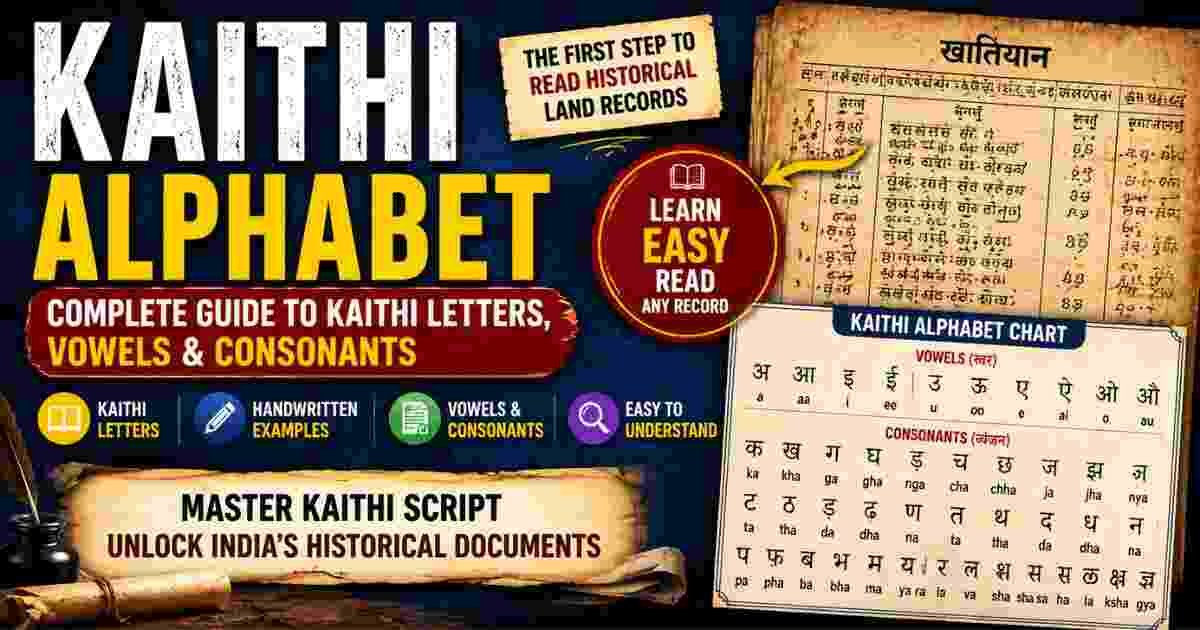
Kaithi Alphabet samajhna Kaithi Script padhne ka sabse important first step hai. Agar aap purane Historical Land Records, Khatiyan, revenue documents, registry papers ya ancestral property ke handwritten records ko padhna chahte hain, toh Kaithi ke basic letters ko identify karna bahut useful hoga.
Kaithi ek historical Indian script hai jiska use alag-alag periods me administrative, commercial aur revenue documents ke liye kiya gaya tha. Purane documents me handwritten Kaithi characters modern Hindi letters se kaafi different dikh sakte hain. Isi wajah se pehli baar Kaithi Khatiyan dekhne wale users ko names, numbers aur revenue terms identify karne me difficulty ho sakti hai.
Lekin tension lene ki zaroorat nahi hai. Agar aap Kaithi Alphabet ko vowels, consonants aur common character patterns ke saath step by step seekhte hain, toh reading gradually easy ho sakti hai. Is guide me hum Kaithi letters ko samajhne ke saath ye bhi dekhenge ki historical Revenue Records, Khatiyan, aur Old Registry Papers me unhe kaise recognize kiya ja sakta hai.
Important: Historical documents ko samajhne ke liye script reading useful hai, lekin property ownership ya legal rights confirm karne ke liye latest official Government Land Records aur competent authorities se verification zaroor karein.
What Is the Kaithi Alphabet?
Kaithi Alphabet Kaithi writing system ke basic characters ka collection hai. Isme vowels aur consonants ka use words aur sounds ko represent karne ke liye kiya jata tha.
Kaithi documents aksar handwritten form me milte hain. Isliye printed alphabet chart aur original historical document ke characters me noticeable difference ho sakta hai. Ek scribe ka handwriting style doosre scribe se different ho sakta hai, aur isi wajah se same character alag documents me slightly different appear kar sakta hai.
Agar aap Kaithi Script Guide ke through learning start kar rahe hain, toh alphabet ko sirf memorize karna sufficient nahi hai. Aapko character ko identify karna, uski sound samajhna aur phir us character ko real document me recognize karna seekhna chahiye.
Ye approach especially useful hai jab aap:
- Kaithi Khatiyan padh rahe hon
- Old revenue entries dekh rahe hon
- Ancestral property documents research kar rahe hon
- Old registry papers samajh rahe hon
- Historical names aur village names identify kar rahe hon
- Purane Land Ownership Records ko modern records se compare kar rahe hon
Why Learn Kaithi Alphabet?
Kaithi Alphabet seekhne ka sabse bada benefit ye hai ki aap purane handwritten documents ko independently understand karne ki direction me first step lete hain.
Aaj ke time me land records increasingly digital ho rahe hain. Lekin purani generations ke documents ab bhi physical registers, scanned pages aur archival records ke form me mil sakte hain. Inme Kaithi, Urdu aur other historical scripts ka use milna possible hai.
For example, agar aapke paas dada-par dada ki property se related ek old document hai, toh usme modern Khata Number, Plot Number, ya current spelling ke bajay historical writing style mil sakti hai. Alphabet recognition ke bina document ko accurately read karna difficult ho sakta hai.
Isi liye Kaithi Alphabet learning ko historical land research ki foundation samjha ja sakta hai.
Kaithi Vowels
Kaithi reading seekhne ke liye vowels se shuruaat karna practical approach hai. Vowels words ki pronunciation ko samajhne me help karte hain aur consonants ke saath combine hokar different sounds create karte hain.
Historical documents me vowels independent characters ke form me ya consonants ke saath attached vowel signs ke form me appear kar sakte hain. Handwriting ki wajah se ye signs kabhi compact, curved ya simplified form me bhi dikh sakte hain.
Beginner ko pehle vowel characters ke basic forms ko recognize karna chahiye. Uske baad unhe simple words aur real document samples me identify karne ki practice karni chahiye.
Basic Vowel Learning Strategy
Kaithi vowels ko learn karte waqt ek simple routine follow karein:
- Character ka basic shape dekhein.
- Uski sound ko yaad karein.
- Similar-looking characters ke saath comparison karein.
- Handwritten examples dekhein.
- Historical documents me us character ko identify karein.
- Usse words ke context me read karein.
Is method se aap sirf alphabet memorize nahi karenge, balki practical reading ability bhi develop karenge.
Kaithi Consonants
Kaithi consonants historical documents ki reading me bahut important hote hain. Most names, places aur revenue terminology consonants ke combinations se form hoti hai.
Kaithi handwriting me consonants ka shape writer ke according change ho sakta hai. Isliye beginners ko ek single textbook-style character par depend nahi karna chahiye.
Aapko ek character ke multiple handwritten forms dekhne chahiye. Jab aap same character ko different documents me repeatedly identify karte hain, toh recognition naturally improve hoti hai.
Common Practice Areas
Consonants ki practice ke liye aap in types ke words par focus kar sakte hain:
- Person names
- Village names
- Family names
- Land-related terms
- Revenue terminology
- Administrative terms
- Property descriptions
Is tarah alphabet learning directly Historical Land Records ke practical use se connect ho jati hai.
Kaithi Letters Ko Kaise Identify Karein?
Kaithi Alphabet padhte waqt ek common problem hoti hai: beginners ek character ko dekhkar immediately pronunciation guess karne lagte hain. Ye approach historical handwriting me mistakes create kar sakti hai.
Better method hai character + word + context ko saath me analyze karna.
Suppose aapko kisi old Khatiyan me ek unfamiliar character dikhta hai. Sirf us character ko isolate karne ke bajay dekhein ki uske pehle aur baad kya likha hai. Agar same character document me kisi doosri line me repeat ho raha hai, toh dono examples ko compare karein.
Context reading se identification ka confidence increase hota hai.
Kaithi Alphabet and Handwriting Variations
Modern printed fonts ke comparison me historical Kaithi handwriting zyada challenging ho sakti hai. Different writers apni personal writing style use karte the. Kuch characters compact hote hain, kuch elongated, aur kuch strokes connected form me appear kar sakte hain.
Isi liye Kaithi Alphabet Chart ko starting reference ke roop me use karein, final interpretation ke roop me nahi.
Agar kisi old Revenue Record me character unclear ho, toh:
- Same page par us character ko dobara search karein.
- Doosre words me same shape compare karein.
- Document ke context ko dekhein.
- Numbers aur headings ko identify karein.
- Similar historical documents se comparison karein.
Ye technique old handwriting ko decode karne me particularly useful hai.
Kaithi Alphabet and Kaithi Numbers
Alphabet ke saath Kaithi Numbers ko samajhna bhi essential hai. Land records me numbers bahut important information represent karte hain.
For example, kisi historical document me aapko:
- Khata Number
- Plot Number
- Survey Number
- Land area
- Revenue amount
- Date
- Registry reference
jaise details mil sakti hain.
Agar letters read ho rahe hain lekin numbers incorrectly identify ho rahe hain, toh entire land record interpretation galat ho sakti hai.
Isi wajah se hamare main Kaithi Script Guide me alphabet ke baad numbers ko separately study karna recommended hai.
Reading Kaithi Alphabet in Khatiyan
Khatiyan padhte waqt alphabet knowledge ka practical use samajh aata hai. Khatiyan me owner names, village details, plot information aur land-related entries ho sakti hain.
Beginner ke liye document ko ek baar me complete read karna difficult ho sakta hai. Iske bajay document ko sections me divide karein.
Step 1: Heading Identify Karein
Sabse pehle document ki heading aur record type identify karein.
Step 2: Owner Name Search Karein
Owner ya raiyat ka naam identify karne ki koshish karein.
Step 3: Numbers Locate Karein
Khata Number, Plot Number aur relevant survey information ko mark karein.
Step 4: Village Details Padhein
Village ya Mauza ka naam identify karein.
Step 5: Revenue Terms Samjhein
Document me repeatedly used terms ko note karein.
Step 6: Modern Record Se Compare Karein
Agar possible ho, toh historical details ko official Digital Land Records ya Online Bhulekh records ke saath compare karein.
Kaithi Alphabet in Old Registry Papers
Old Registry Papers me names aur property descriptions ko read karne ke liye alphabet recognition especially useful hoti hai.
Registry document me date, parties, land description, consideration, boundaries aur registration information jaise details ho sakti hain. Historical document ka exact format period aur location ke according change ho sakta hai.
Agar aap registry paper read kar rahe hain, toh pehle names aur numbers identify karein. Uske baad property description ko read karein. Har word ka meaning guess karne ke bajay complete sentence ka context samajhna better approach hai.
Agar document legal ownership se related hai, toh independent interpretation ko final legal conclusion na maanein. Official Registry Office, Revenue Department, ya qualified professional se verification appropriate ho sakta hai.
Common Kaithi Alphabet Reading Mistakes
Beginners ke liye kuch mistakes particularly common hoti hain.
Similar Characters Ko Confuse Karna
Kuch handwritten characters appearance me similar ho sakte hain. Isliye ek isolated character ke basis par final reading avoid karein.
Handwriting Style Ignore Karna
Har historical document professionally printed nahi hota. Writer ke style ke according character shape change ho sakta hai.
Numbers Ko Ignore Karna
Land records me numbers ownership aur parcel identification ke liye critical hote hain.
Context Ignore Karna
Ek character ka meaning surrounding word aur sentence ke context se clearer ho sakta hai.
Modern Spelling Force Karna
Historical names ki spelling modern spelling se different ho sakti hai. Is difference ko automatically error assume nahi karna chahiye.
Kaithi Alphabet Seekhne Ka Best Method
Kaithi Alphabet seekhne ke liye consistent practice sabse important hai. Aap ek simple learning routine bana sakte hain.
Day 1–3: Basic character recognition.
Day 4–7: Vowels aur consonants ki revision.
Week 2: Numbers aur simple words.
Week 3: Historical document samples.
Week 4: Khatiyan aur old revenue entries ki practice.
Aapko learning ke dauran ek personal notebook bhi maintain karni chahiye. Difficult characters ko manually copy karein aur unke different handwritten forms collect karein.
Isse aapko ek personal Kaithi Character Reference develop karne me help milegi.
Kaithi Alphabet vs Modern Devanagari
Kaithi aur Devanagari dono Indian writing traditions ka important part hain, lekin unka visual appearance aur historical usage different hai.
| Feature | Kaithi | Modern Devanagari |
| Historical Use | Administrative, commercial and revenue writing | Broad literary and administrative use |
| Appearance | Often compact and handwritten | More standardized |
| Historical Land Records | Common in several North Indian archives | Also found in later records |
| Beginner Difficulty | Historical handwriting can be challenging | Generally easier for modern Hindi readers |
| Practical Learning | Requires document-based practice | Widely taught today |
Agar aap modern Hindi padh sakte hain, toh bhi Kaithi automatically readable nahi ho jayegi. Script recognition separately develop karni padti hai.
Kaithi Alphabet and Historical Land Records
Historical Land Records ko samajhne ke liye alphabet sirf ek part hai. Aapko numbers, revenue terminology, maps aur document structure bhi samajhna hoga.
For example, ek old land record me owner ka naam Kaithi me ho sakta hai, land identification number historical numeral me ho sakta hai aur boundaries traditional terminology me describe ki gayi ho sakti hain. Isliye complete interpretation ke liye multiple skills combine karna zaroori hai.
Aap hamare main Kaithi Script Guide ko pillar resource ke roop me use kar sakte hain, jahan alphabet ke saath Kaithi Numbers, Khatiyan reading, Zamindari Records aur Old Registry Papers ke baare me bhi detailed information available hai.
Historical land records ko samajhne ke saath modern digital records ka system samajhna bhi useful hai. India ka Digital India Land Records Modernization Programme (DILRMP) land-record modernization aur digitization se related government initiative hai. Isliye historical documents ko modern digital records ke context me study karna researchers aur property-document users ke liye helpful ho sakta hai.
Kaithi Alphabet Learning for Ancestral Property Research
Agar aap apni Ancestral Property ke old documents research kar rahe hain, toh Kaithi Alphabet ka basic knowledge particularly helpful ho sakta hai.
Purane family records me:
- Land ownership details
- Village names
- Family names
- Plot references
- Revenue entries
- Registry information
mil sakti hain.
Lekin historical document ko modern ownership proof samajhne se pehle current records verify karna zaroori hai. Property ownership time ke saath sale, inheritance, partition aur Land Mutation ke through change ho sakti hai.
Isi liye historical document ko ownership history ka ek important source samjhein, lekin final verification official records se karein.
Conclusion
Kaithi Alphabet seekhna historical Indian documents ko samajhne ki foundation hai. Agar aap Kaithi Khatiyan, Historical Land Records, Old Registry Papers, ya purane Revenue Records padhna chahte hain, toh alphabet recognition se learning start karna practical approach hai.
Sirf characters memorize karne ke bajay unhe real handwritten documents ke context me practice karein. Vowels, consonants aur numbers ko gradually learn karein aur phir Khatiyan, registry papers aur other historical records par apply karein.
Sabse important baat ye hai ki patience rakhein. Historical handwriting modern printed text jaisi uniform nahi hoti, isliye repeated practice aur character comparison aapki accuracy improve karenge.
Agar aap Kaithi Script Guide ko systematically follow karte hain, toh next step ke roop me Kaithi Numbers, Kaithi Revenue Terms, aur Kaithi Khatiyan Reading Guide ko study kar sakte hain. In resources ko combine karke aap Historical Land Records ko samajhne ke liye ek strong foundation develop kar sakte hain.
Is Kaithi Alphabet difficult to learn?
Beginning me Kaithi Alphabet difficult lag sakta hai, especially agar aapne pehle historical handwritten scripts nahi padhi hain. Lekin regular character recognition aur document practice ke saath learning easier ho sakti hai.
Can I read Khatiyan after learning Kaithi Alphabet?
Basic alphabet knowledge aapko Khatiyan reading ka strong foundation deta hai. Lekin complete Khatiyan interpretation ke liye Kaithi Numbers, revenue terminology aur document structure bhi samajhna zaroori hai.
Where can I practice Kaithi Alphabet?
Aap historical document samples, archival scans aur trusted educational resources ke saath practice kar sakte hain. Practice karte waqt authentic sources ko preference dein.
Is Kaithi used in modern land records?
Modern land administration increasingly digital aur standardized systems use karti hai. However, historical records aur archived documents me Kaithi Script mil sakti hai.
Can Kaithi help me understand ancestral property documents?
Haan, basic Kaithi reading skills old Property Documents, Khatiyan, aur revenue records ko understand karne me help kar sakti hain. Lekin ownership ya legal rights ke final confirmation ke liye official records aur professional advice ko priority deni chahiye.
7 thoughts on “Kaithi Alphabet: Complete Guide to Kaithi Letters, Vowels & Consonants”